


There are ~600+ stocks listed on the Singapore exchange. I’ve limited the dataset to the Straits Times Index (STI) constituent stocks, then use the SGX Stock Screener to filter for those with a Price-to-Book (PB) ratio of less than 1 which means that they are trading below their net asset value.
Are there still undervalued blue-chip stocks in the Singapore market today? As of 3 Jun 2026, we’ve identified 10 such stocks. Here’s the list:


10 undervalued stocks in Singapore (Jun 2026)
| Name | Ticker | Price / Book | P/E Ratio | Dividend Yield | Market Cap | Industry |
|---|---|---|---|---|---|---|
| Hongkong Land Holdings Limited | H78 | 0.52 | 12.77 | 3.4% | 16.00B | Real Estate Management & Development |
| Jardine Matheson Holdings Limited | J36 | 0.66 | 17.31 | 3.6% | 19.08B | Industrial Conglomerates |
| Mapletree Pan Asia Commercial Trust | N2IU | 0.71 | 25.67 | 6.3% | 6.76B | Diversified REITs |
| UOL | U14 | 0.72 | 17.50 | 1.8% | 8.42B | Real Estate Management & Development |
| Wilmar International Limited | F34 | 0.77 | 11.87 | 4.0% | 21.48B | Food Products |
| City Developments Limited | C09 | 0.80 | 12.10 | 3.3% | 7.67B | Real Estate Management & Development |
| Mapletree Logistics Trust | M44U | 0.86 | 23.90 | 6.2% | 6.14B | Industrial REITs |
| Frasers Logistics & Commercial Trust | BUOU | 0.88 | 17.58 | 6.0% | 3.76B | Industrial REITs |
| Genting Singapore | G13 | 0.89 | 18.74 | 6.5% | 7.31B | Hotels, Restaurants & Leisure |
| Frasers Centrepoint Trust | J69U | 0.96 | 20.18 | 5.3% | 4.59B | Retail REITs |
1. Hongkong Land (H78): P/B 0.52
Hongkong Land is a property investment, development and management group, with over US$50 billion in assets under management, one of Singapore’s blue-chip property stocks.
As its name suggests, most of its portfolio is concentrated in Hong Kong. It’s portfolio primarily comprises office and retail properties, and it made our list of Singapore Blue Chip stocks with Moats.
In the years following Covid-19, Hongkong Land struggled with poor performance and a declining share price due to its exposure to Hong Kong and China properties. Despite their strong dividend yield around 5%, investors would have still lost 5.58% after holding it for the past ten years till 2024.
However, in their long-awaited strategy update on 29 October 2024, the company announced a major pivot towards property investment rather than development. Management aims to generate more recurring income and plans to exit the build-to-sell segment, which is largely residential, and focus on developing ultra-premium integrated commercial properties in Asia’s gateway cities. Hongkong Land also considered packaging some properties into REITs or private funds. By setting up a REIT, Hongkong Land could sell a portion of its properties while retaining a majority stake, much like other sponsors such as CapitaLand. This approach would allow the company to free up capital while still maintaining control over the properties. This strategic shift marked the beginning of a broader turnaround plan.
In its FY2025 results announced on 5 March 2026, Hongkong Land reported underlying profit of US$458 million, down 8% year-on-year, reflecting softer office rents in Hong Kong and lower development contributions. However, profit attributable to shareholders rebounded to US$1.26 billion, reversing a loss in the previous year mainly due to valuation movements and asset reclassifications. During the year, the group continued to execute its capital recycling strategy, achieving US$3.6 billion of asset disposals — about 90% of its 2027 target — while reducing net debt by around 30% to US$3.6 billion. The company also returned capital through US$330 million of share buybacks and raised its full-year dividend to US25 cents per share.
The company also made significant progress in executing its capital-recycling strategy. Hongkong Land announced the sale of its one-third stake in Marina Bay Financial Centre (MBFC) Tower 3 to Keppel Reit for S$1.45 billion on 11 December and subsequently launched its Singapore Central Private Real Estate Fund (SCPREF) on 3 February 2026. The Singapore-focused private fund debuted with S$8.2 billion of assets under management at inception. As part of the fund’s seeding, Hongkong Land contributed its 33⅓% interests in MBFC Towers 1 and 2 and One Raffles Quay, alongside other prime Singapore commercial assets. This is in-line with Hongkong Land’s strategic shift from being primarily a direct owner of office assets to capital-recycling and fund management, unlocking value from mature buildings and generating recurring management fees while bringing in third-party capital.
In March 2026, the group redeployed recycled capital by acquiring a 10.8% stake in Suntec REIT for S$541 million. It has also initiated an organisational redesign into four portfolio Chief Executives, covering Hong Kong Central, SCPREF, Westbund Central, and the Chinese mainland, to sharpen asset-level accountability.
In its 1Q26 Interim Management Statement released on 19 May 2026, underlying profit came in 5% higher than 1Q25, driven by lower net financing charges. In Hong Kong, higher retail rents and cost savings largely offset softer office rents, with committed vacancy improving to 5.5% and market rents now growing. Singapore contributions were lower following the MBFC Tower 3 disposal, though SCPREF recorded positive rental reversions and 4.1% uncommitted vacancy. Chinese mainland contributions grew on the back of newly opened projects and trade-mix upgrades. Management expects full-year 2026 underlying profit to be mildly higher than 2025.
Hongkong Land remains the most undervalued stock on this list with a P/B of 0.52. It is now trading above both its historical average of 0.3, and the industry P/B of 0.4, with a dividend yield of 3.4%.
2. Jardine Matheson Holdings (J36): P/B 0.66
Jardine Matheson (JDM) is a conglomerate with a diverse range of businesses under its umbrella, with a hand in sectors ranging from property to retail and even heavy machinery and construction.
Given JDM’s complex business and size, Alvin had ranked it as “JOMO” in his Singapore Blue Chip Stocks ranking video.

It holds 75% of Jardine C&C, 52% of Hongkong Land and many more.
In its FY2025 results announced on 10 March 2026, Jardine Matheson reported revenue of US$34.2 billion, a 4% decline year-on-year from US$35.8 billion in FY2024. Despite the drop in revenue, the group delivered stronger profitability with underlying net profit rising 11% to US$1.681 billion, compared with US$1.518 billion in the previous year.
Reported net profit came in at US$1.109 billion, reversing from a US$468 million loss in FY2024, which had been impacted by impairment charges. On an underlying basis, earnings per share increased to US$5.72, up from US$5.24 previously. Jardine Matheson also continued active capital management during the year, completing around US$4.8 billion of capital recycling across its portfolio.
The board declared a final dividend of US$1.75 per share, bringing the total FY2025 dividend to US$2.35 per share, representing a 4% increase year-on-year. and a dividend yield of about 3.6%. Overall, the results reflect Jardine Matheson’s continued transition toward a more active investment holding and capital allocation model, with portfolio restructuring and capital recycling across businesses such as Hongkong Land and DFI Retail aimed at improving long-term returns.
In its 1Q26 Interim Management Statement released on 22 May 2026, Jardine Matheson reported solid performance in line with the prior year (adjusted for disposals), maintaining full-year profit guidance and upgrading its dividend outlook to at least US$2.45 per share (+4%). The group recycled US$0.8 billion and redeployed US$1.2 billion during the quarter, with the parent balance sheet remaining net cash, while corporate overhead was cut by ~15% versus 2024.
Jardine Matheson is trading at a P/B of 0.66. Its is now above its historical P/B of 0.6 but still below its industry average of 0.9. It’s share price has risen by ~48% over the past year, but is down ~4% YTD.
Please keep in mind that JMD’s business is cyclical, such stocks are not that suitable for holding long term. Instead, you might want to rely on its momentum and consult related technical indicators if you wish to ride JDM’s price action.
3. Mapletree Pan Asia Commercial Trust (N2IU): P/B 0.71
Mapletree Pan Asia Commercial Trust (MPACT) is the renamed entity after Mapletree Commercial Trust (MCT) acquired and merged with Mapletree North Asia Commercial Trust on 3 Aug 2022. We covered the merger here.
MPACT now has 16 properties across five key gateway markets of Asia – five in Singapore, one in Hong Kong, two in China, seven in Japan and one in South Korea, with a portfolio valuation of S$15.2 billion as at 31 March 2026.
In its latest results released on 28 April 2026, MPACT reported 4Q FY25/26 gross revenue of S$210.7 million and net property income (NPI) of S$159.6 million, down 5.5% and 5.9% year-on-year, respectively. The decline was mainly due to lower overseas contributions and the absence of full-period contributions from three divested properties — TS Ikebukuro Building and ABAS Shin-Yokohama Building (both divested in August 2025) and Festival Walk Tower (divested February 2026). Property operating expenses improved 4.1% year-on-year from lower maintenance and utility costs, while finance expenses improved 17.9% year-on-year driven by lower interest rates and debt reduction from divestment proceeds. Singapore’s gross revenue and NPI grew 1.8% and 2.1% yoy respectively, led by VivoCity following completion of its Basement 2 asset enhancement initiative. Distribution per unit (DPU) for 4Q FY25/26 was 1.90 Singapore cents, down 2.6% y-o-y.
For FY25/26, gross revenue and NPI declined 4.6% and 4.3% year-on-year to S$867.3 million and S$654.4 million respectively, similarly reflecting lower overseas contributions and the divestment effect. Singapore’s gross revenue and NPI (excluding Mapletree Anson) grew 2.3% and 4.1% year-on-year, helping cushion overseas headwinds. Lower finance expenses (down 15.3%) further supported the bottom line. Full-year reported DPU was 7.97 Singapore cents; excluding the one-off tax charge, DPU would have been 8.11 Singapore cents, 1.1% higher year-on-year.

Singapore remains the key pillar of stability. VivoCity delivered strong all-round performance with near-full committed occupancy, 7.6% full-year NPI growth, 14.1% rental reversion and 3.7% year-on-year tenant sales growth, with full-year tenant sales reaching S$1.1 billion. Festival Walk maintained 100% committed occupancy despite a challenging Hong Kong retail environment, with an ongoing reconfiguration expected to convert 18,800 sq ft into a multi-concept F&B and lifestyle cluster with a projected ROI of close to 50%.

On the capital management front, aggregate leverage improved to 36.5% with the weighted average all-in cost of debt declining to 3.16%, strengthening interest coverage to 3.2 times. Net asset value per unit stood at S$1.73 as at 31 March 2026.
On the dividend yield front, MPACT is currently yielding 6.3%.
As of the latest update, MPACT is trading at a P/B of 0.71. Its share price has dropped by about 13% YTD. Compared to its historical P/B of 0.9, MPACT seems underpriced, reflecting investor’s concerns about the strength of its portfolio and weakness in its overseas properties.
4. UOL (U14): P/B 0.72
UOL is a real estate management company with an extensive portfolio of development and investment properties. It has geographical presence in 15 countries and total assets of $22.5 billion as at 31 Dec 2025.

For its FY2025 results announced on 26 February 2026, UOL reported a 49% increase in attributable profit before fair value and other gains (operating PATMI) to $468.7 million, driven by stronger performance from its property development and property investment segments. Net attributable profit (PATMI) also rose 34% year-on-year to $481.7 million, supported by improved contributions across most business segments.
Group revenue increased 16% to $3.23 billion, mainly due to higher progressive revenue recognition from residential developments, as well as new revenue contributions from UPPERHOUSE at Orchard Boulevard. Revenue from property investments also rose 13% to $629.3 million, supported by the acquisition of an interest in 388 George Street in Sydney, improved performance at Singapore Land Tower following its asset enhancement initiative, and full-year contributions from Odeon 333. Pre-tax profit before fair value and other gains rose 33% to $708.0 million, due mainly to higher operating profits across most segments, stronger share of profits from development joint ventures, and lower net finance expenses amid declining borrowing costs.
UOL’s share price remains up by 85% over the past year and 22% YTD, buoyed by strong Singapore property market tailwinds supporting developers.
At the point of update, UOL’s dividend yield is about 1.8%, with a total dividend of $0.25 per share for FY2025. P/B of 0.72 is now significantly higher than its historical P/B of 0.6.
5. Wilmar International Limited (F34): P/B 0.77
Wilmar International is a consumer goods and commodity conglomerate involved in the entire supply chain. Some of its business processes include the cultivation of palm oil and sugarcane, distribution of consumer food products as well as processing and distribution of animal feeds and industrial agri-products like biodiesel.
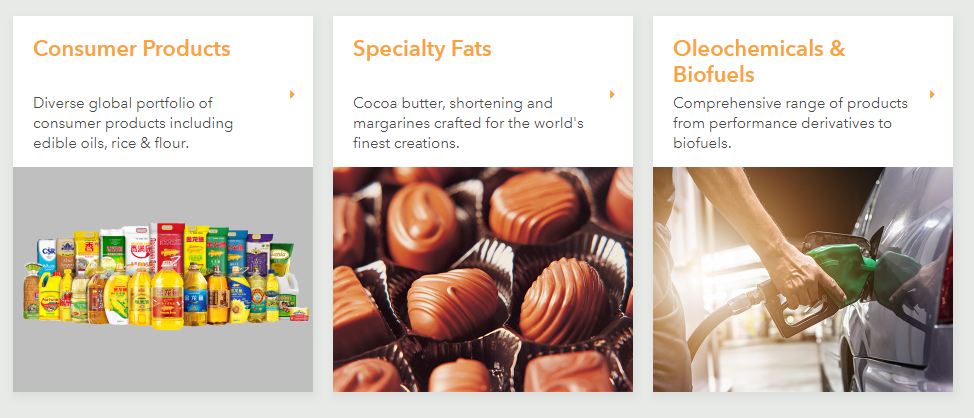
For its FY2025 results announced on 26 February 2026, Wilmar reported revenue of US$70.42 billion, up 4.5% year-on-year, while profit before tax rose 19.8% to US$2.09 billion. Reported net profit increased 20.6% to US$1.41 billion, while core net profit rose 9.7% to US$1.28 billion.

The improvement was mainly driven by stronger margins in the Feed & Industrial Products segment and higher contributions from associates and joint ventures, which offset softer performance in some upstream operations. This reflects Wilmar’s diversified business model, where downstream consumer food demand and processing margins helped cushion volatility in agricultural commodity markets during the year.

The Group also generated operating cash flow of US$2.36 billion during the year. The board proposed a final dividend of S$0.10 per share, bringing the total FY2025 dividend to S$0.14 per share, including the interim dividend of S$0.04 per share.
In its 1Q26 results released on 29 April 2026, revenue surged 21.9% to US$19.75 billion, though much of the jump reflected the first full-quarter consolidation of AWL Agri Business with organic growth at a more modest 7.6%. Core net profit fell 23% to US$264.2 million, hit by temporary mark-to-market hedging losses from Iran war-related commodity volatility, which is expected to reverse as physical contracts are settled. Weaker associate contributions and softer palm oil and sugar performance added to the drag. The outlook remains cautious with geopolitical tensions and evolving trade policies as key variables for the rest of the year.
Wilmar has been paying dividends since 2013. At the point of writing, its dividend yield is about 4.0% and is trading at a P/B of 0.77, still below its historical average P/B of about 1. Wilmar’s share price has dropped by 13% since its recent peak in Apr 2026 as US-Iran tensions eased.
6. City Developments (C09): P/B 0.80
City Developments Limited (CDL) is a real estate operating company with a diverse property portfolio of residential, commercial and hotel properties (M social and Millennium hotel brands) located worldwide. They are involved in property development, asset management and hotel operations. CDL also owns ~ 50% of iREIT Global which has a portfolio of commercial and retail properties across Europe.
CDL made headlines in March 2025 due to the high stakes boardroom dispute between its executive chairman, Kwek Leng Beng, and his son, CEO Sherman Kwek. Amid allegations of an attempted coup, corporate governance issues, lack of accountability, and the excessive influence of an advisor, lawsuits have been filed in the escalating battle between father and son. Although the lawsuit has since been withdrawn, the power struggle raises questions about how it may influence the company’s future direction and governance. In July 2025, CDL announced that Philip Yeo, a non-independent non-executive director at the company who served for the 16 years, would retire on 31 July, possibly marking another step toward leadership renewal within the company.
In their latest operational update for FY 2025 reported on 26 Feb, CDL reported revenue of S$3.59 billion, up 9.7% year-on-year, while profit before tax more than doubled to S$771.5 million. PATMI tripled to S$629.7 million, driven by strong Singapore residential sales and substantial capital recycling gains, including the sale of its 50.1% stake in South Beach in 2H2025. The Group achieved its highest residential sales value in Singapore on record at S$4.35 billion, up 46% year-on-year, comprising 1,657 units sold.

CDL also secured around S$2 billion in global asset divestments during the year and maintained strong liquidity, with cash and undrawn committed credit facilities of S$4.2 billion. The board also proposed a total FY2025 ordinary dividend of 28.0 cents per share, representing a 40% payout ratio.

In its 1Q26 operational update, Singapore residential sales fell 68% year-on-year to S$609.6 million due to fewer launches, with strong pricing achieved in the luxury segment. The group secured a S$709.3 million Tanjong Rhu GLS site, the first private residential GLS there in 30 years, and also plans to launch the 570-unit Lucerne Grand condominium in 3Q26. Commercial occupancy remained healthy, while hotel performance was a bright spot with global RevPAR up 4.3% to S$144.80, led by Australasia (+17.7%) and Singapore (+7.5%). CDL also divested Fortune Centre as part of its capital recycling programme, and management remains focused on portfolio optimisation amid ongoing geopolitical and macroeconomic uncertainties.
As of the current update, City Dev is currently trading at a P/B of 0.80 with a dividend yield of 4.0%, in line with both its historical P/B and industry average of 0.8.. CDL’s share price has shown strong momentum in recent months, rebounding by 86% from its low in April 2025 and is up about 4% YTD.
8. Mapletree Logistics Trust (M44U): P/B 0.86
Mapletree Logistics Trust (MLT) offers exposure to logistics real estate across Asia. At at 31 March 2026, MLT owned 175 properties in 9 markets with an aggregate property valuation of S$13.1B, with an occupancy of 96.9% at a weighted average lease expiry of about 2.5 years.
In its latest results announced on 30 April 2026, MLT reported 4Q FY25/26 gross revenue of S$176.6 million and net property income of S$151.4 million, down 1.7% and 0.9% year-on-year respectively, primarily driven by the absence of contributions from divested properties and weaker regional currencies. Excluding the impact of divestments and currency volatility, MLT would have registered growth in both revenue and NPI, supported by higher contributions from the existing portfolio and new contribution from its completed redevelopment project in Singapore. Property expenses fell 6.3% year-on-year, while borrowing costs declined 3.0% through proactive refinancing and debt repayment from divestment proceeds.

For the full year FY25/26, gross revenue and NPI declined 2.6% and 2.4% to S$708.3 million and S$610.2 million respectively, reflecting the impact of divestments combined with regional currency weakness. Distributable income fell 8.9% year-on-year to S$370.1 million, largely due to the absence of divestment gains which had contributed S$27.0 million in FY24/25. Accordingly, full-year DPU was 9.8% lower at 7.262 cents. Excluding divestment gains, adjusted DPU from operations fell a more modest 3.4% year-on-year, reflecting the underlying resilience of the portfolio.

MLT’s share price is up 8% over the past year but down around 10.6% year-to-date. This relative underperformance likely reflects ongoing investor caution toward logistics assets amid continued geopolitical and trade-related uncertainties.
As of the current update, Mapletree Logistics Trust is currently trading at a P/B of 0.86, with a dividend yield of 6.2%. Compared to its historical P/B of 1.2, and the historical P/B of its industry peers of 0.8, MLT seems to be slightly undervalued.
8. Frasers Logistics & Commercial Trust (BUOU): P/B 0.88
Frasers Logistics & Commercial Trust (FLCT) is a REIT that gives you exposure to a portfolio of 113 industrial and commercial properties valued at ~S$6.9 billion (as at 31 December 2025) across five major developed markets.
For its 1HFY26 results announced on 5 May 2026, FLCT reported revenue of S$238.9 million and adjusted net property income of S$167.0 million, representing year-on-year increases of 2.8% and 3.6% respectively. The growth was driven by positive rental reversions and annual rent review increments from its Australian and European logistics & industrial segments, full contribution from 2 Tuas South Link 1 (acquired November 2024), and favourable currency tailwinds. This was partially offset by the divestment of 357 Collins Street in September 2025, higher vacancies in its commercial properties, and higher non-recoverable land taxes in Australia.

The logistics & industrial portfolio demonstrated exceptional strength with near-full occupancy of 99.8% and rental reversions of +9.4% on an incoming vs. outgoing rent basis and +23.2% on an average rent vs. average rent basis. The commercial portfolio, while lagging at 88.4% occupancy, showed signs of stabilisation. Overall portfolio occupancy stood at 96.1% as at 31 March 2026 with a WALE of 4.9 years.

Distribution income for 1HFY26 declined by 1.0% to $111.9 million and DPU was down 1.7% y-o-y at 2.95 cents, representing an annualised distribution yield of 6.9% based on the closing price of S$0.895 as at 31 March 2026. Current dividend yield stands at 6.0%. On the capital management front, aggregate leverage remained healthy at 33.7% with an interest coverage ratio of 4.4 times and cost of borrowings stable at 3.2% per annum.
9. Genting Singapore (G13): P/B 0.89
A new entry to the Undervalued Stocks list in May, Genting Singapore (SGX: G13) is a leading integrated resort developer and operator, best known for Resorts World Sentosa—one of Asia’s premier destinations for gaming, entertainment, and hospitality. The company derives its revenue from casino operations, hotels, attractions, and retail.
In its latest FY2025 results announced on 24 February 2026, Genting Singapore reported revenue of S$2,452.1 million and Adjusted EBITDA of S$815.8 million. Revenue declined modestly by 3% year-on-year, as gaming revenue was impacted by a lower win rate, partially offset by strengthening non-gaming revenue in the second half of the year as newly refreshed attractions and hospitality offerings drove improved guest engagement. Adjusted EBITDA declined 15% year-on-year, reflecting ramp-up costs associated with new launches, operating costs incurred during temporary closures, and ongoing infrastructure upgrades as part of the RWS 2.0 transformation programme. Net profit declined by 33%, further impacted by lower interest income from declining market interest rates and fair value losses on portfolio investments.

FY2025 was characterised by management as a deliberate transition year, with the Group advancing a significant phase of its asset refresh programme at RWS while maintaining live operations. The ongoing repositioning of RWS as an experience-based integrated resort destination is intended to lay the foundation for the next phase of growth.
Despite the earnings pressure, Genting Singapore’s balance sheet remains strong, with total equity of S$8.2 billion and cash balances in excess of S$3.2 billion as at 31 December 2025. Total dividends for FY2025 were maintained at 4.0 cents per share, unchanged from FY2024, comprising an interim dividend of 2.0 cents and a proposed final dividend of 2.0 cents per share.
In its 1Q26 quarterly business overview released on 12 May 2026, revenue came in at S$607.6 million with Adjusted EBITDA of S$179.0 million, both down around 3% and 24% year-on-year respectively. Gaming revenue fell 8%, while non-gaming revenue grew 8%, supported by higher visitation to Universal Studios Singapore and the Singapore Oceanarium. Net profit declined 55% to S$65.2 million, partly reflecting the high base from 1Q25. Sequentially, however, results improved with Adjusted EBITDA up 6% from 4Q25 and net profit rose 7%, suggesting the business is gradually stabilising. The group flagged that Middle East conflict and geopolitical tensions are pushing up energy, freight and logistics costs while elevated airfares are weighing on travel demand. Genting’s share priced dropped by 11% after the results was released, reflecting investor’s concerns over its performance.
Genting’s is currently trading at a P/B of 0.89 with a dividend yield of 6.5%. With the RWS 2.0 refresh progressing and a fortress balance sheet providing a strong buffer, Genting Singapore may appeal to patient investors willing to look through the near-term earnings reset.
10. Frasers Centrepoint Trust (J69U): P/B 0.96
Frasers Centrepoint Trust (FCT) is one of the largest suburban retail mall owners in Singapore with nine retail malls and an office building located in the suburban regions of Singapore.
In its latest 1HFY26 results announced on 24 April 2026, FCT reported gross revenue of S$221.9 million and NPI of S$160.8 million, both up 20.3% and 20.2% year-on-year respectively. Growth was primarily driven by the contribution from Northpoint City South Wing, which was acquired in May 2025, and higher passing rents across most malls, partially offset by the divestment of Yishun 10 Retail Podium and the ongoing AEI at Hougang Mall. Distribution to unitholders amounted to S$125.0 million, 13.6% higher year-on-year, with 1HFY26 DPU rising 1.4% year-on-year to 6.136 cents.

With approximately 3.0 million square feet of net lettable area and over 1,900 leases in its retail portfolio, FCT maintained its dominant position in the suburban retail space. Committed occupancy improved to 99.8% as at 31 March 2026, up from 98.1% in the previous quarter, with average rental reversion of +6.5% on an average-to-average basis. Shopper traffic grew 1.8% year-on-year while tenants’ sales rose 3.2% year-on-year.
FCT’s balance sheet remains healthy with aggregate leverage at 40.0% as at 31 March 2026, average cost of borrowing declining to 3.2% in 2QFY26, and interest coverage ratio of 3.59 times. As of the current update, FCT’s dividend yield is 5.3% and it is trading at a P/B of 0.96. Compared to its historical P/B of 1.0, FCT appears modestly underpriced, supported by a resilient suburban retail portfolio and a healthy near-term AEI pipeline.
Conclusion
I’ve listed 10 undervalued stocks in Singapore for June 2026, based on their Price-to-Book ratio and I hope this article gave you some investing ideas to research into. Several of the stocks have also rebounded since last month’s edition, reflecting the generally buoyant market sentiment in the Singapore market.
Also, please keep in mind that although PB may be a good primary filter of undervalued stocks, you should do your own deeper research into the fundamentals and performance of any company that you wish to invest in, given the challenges and macroeconomic headwinds that they might be facing.
If you’re not sure how to start, refer to our value investing guide, or join Alvin at his upcoming webinar where you’ll learn how you can pick undervalued stocks using Dr Wealth’s i3 investing strategy.


Hi is there a mistake in the p/b for yzj shipping? Should it be 1.36 instead?
Hey there, the P/B value may be different depending on how it is calculated. I’m using the SGX stock screener to quickly screen for these stocks as a 1st pass. They calculate the P/B using the Current Price divided by the latest interim period Book Value per share.
Hi, Thanks for the sharing! MPAT seems trading at an interesting price level! NAV 1.759, Gearing is 40.9% a little bit high in my opinion! Yearly dividend is about 9 cents, yield is 5.5% based on current price of 1.63.
“As of the current update, Capitaland Investment is currently trading at a P/B of 0.96. Compared to its industry sector’s P/B of 0.8, CLI seems to be slightly undervalued.
CLI is another REIT that rarely trades below or close to a P/B of 1, so this might be a good time to take a deeper look into this REIT as well.”
CLI is not a REIT per se, more like a management company. Also, if the P/B is 0.96 and the industry sector’s P/B is 0.8, wouldn’t CLI be overvalued compared to the industry average?
you’re right! thanks for picking that up!
Hi,
Interestingly, all your picks have net debt, and almost all are related to property plays.